
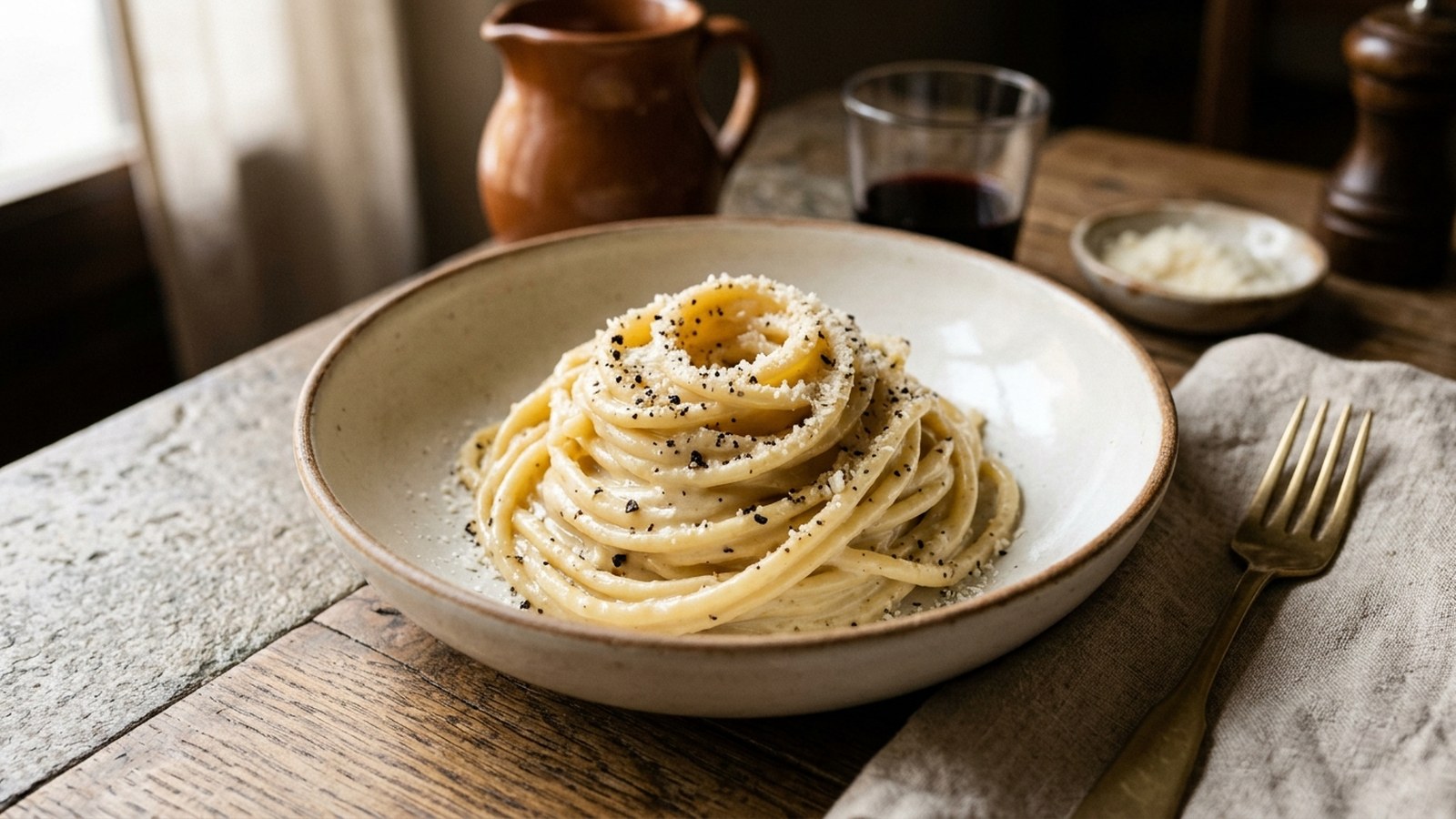
Born among Apennine shepherds carrying cured sheep cheese, dried pasta, and whole peppercorns, Cacio e Pepe is modern culinary science’s sharpest test of temperature control.
Roman Cacio e Pepe (Starch-Gel Cheese Emulsion Science)
Authentic Roman Cacio e Pepe in both 20-minute artisanal mantecatura and foolproof 10-minute cornstarch-water Speed-Hack guaranteeing silk without clumping.

Bistro Executive Chef • "Behind the Line" Column
“Chef Marek’s rule: Pecorino proteins seize above 65 °C. Pull the pan off the flame for 45 seconds before tossing, or stabilize with our 1% starch-gel slurry.”
Step-by-Step Execution & Timers
Simmer pasta in half-volume low-salt water
Boil pasta in just 1.1 L lightly salted water to concentrate starch. Toast freshly cracked black pepper dry for 60 s, then deglaze with a ladle of starchy pasta water.
Reduced water volume concentrates free starch granules that shield cheese proteins.
Lightly salt pasta water only—aged Pecorino delivers intense salinity.
Aromatic toasted peppercorn steam over cloudy white pasta water.
Temper cheese paste & toss strictly below 62 °C
Whisk microplaned Pecorino with 55 °C tempered pasta water into a creamy paste. Toss half-cooked pasta in pan, take OFF burner for 45 s, add cheese cream, and vigorously toss until glossy.
Pre-hydrating microplaned cheese at 55 °C creates an unbreakable satin suspension.
Zero direct flame during cheese addition (65 °C coagulation ceiling).
Glossy velvety coating hugging every pasta strand.
Context-Aware Kitchen Mentor
Snap or simulate a pan frame — Sous-Chef gauges Maillard browning vs. scorching risk.
Reduced water volume concentrates free starch granules that shield cheese proteins. Burn guard: Lightly salt pasta water only—aged Pecorino delivers intense salinity.
Tell me what you see and hear right now on "Simmer pasta in half-volume low-salt water". Look for this exact cue: Aromatic toasted peppercorn steam over cloudy white pasta water.
Kitchen FAQ (Schema Grounded)
Does traditional Roman Cacio e Pepe ever contain butter or cream?
Never in classic Rome. Pure starchy pasta cooking water emulsifies the melted sheep-cheese fats at 56–62 °C.