
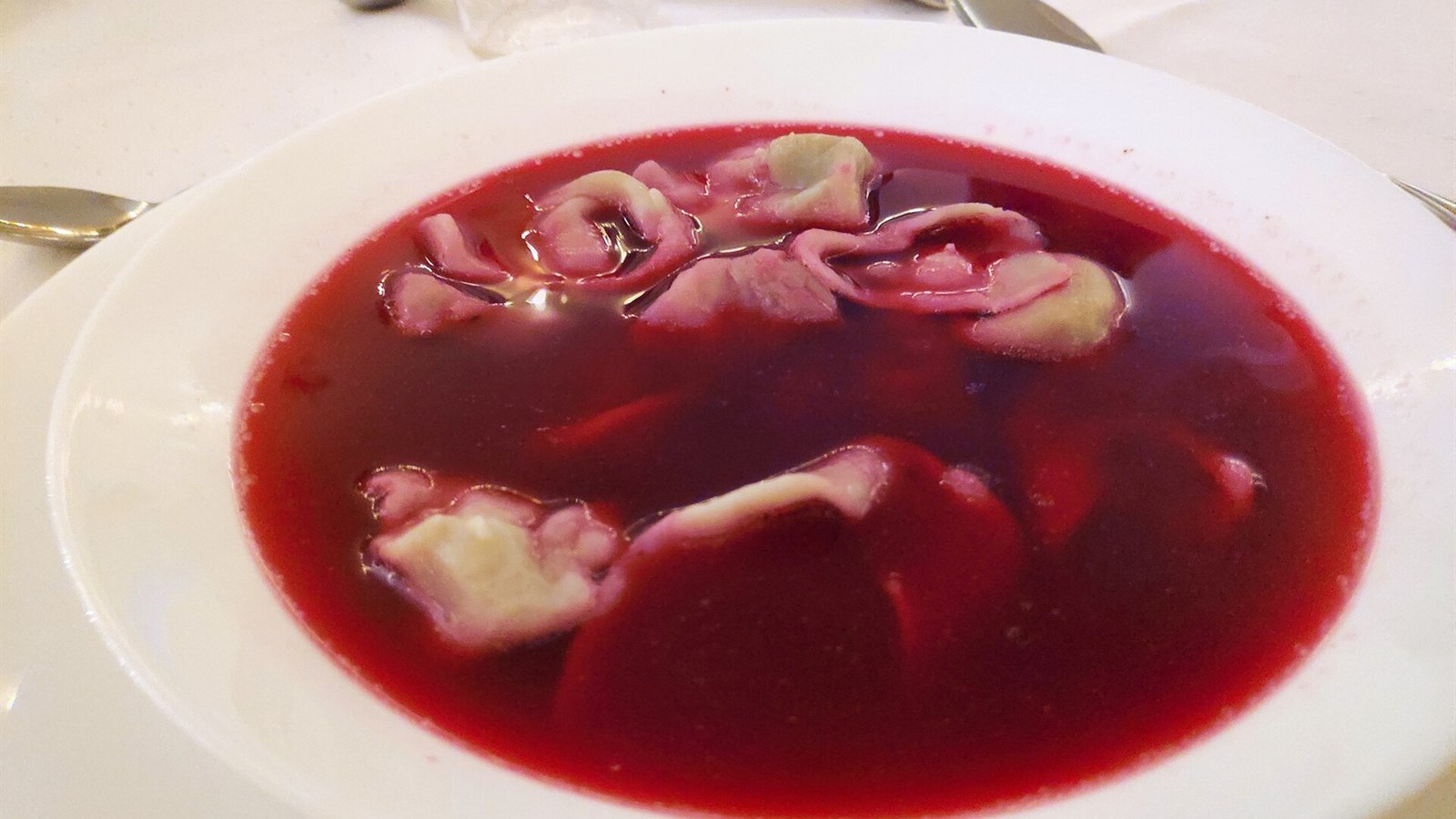
The centerpiece of Poland’s Christmas Eve supper evolved from wild hogweed ferments in the 16th century into a crystal-clear, garnet fermented beetroot broth perfumed with wild dried porcini.
Christmas Eve Fermented Beet Borscht (7-Day Zakwas vs. 25-Min Speed-Hack)
Kitchen-tested Polish Christmas Eve Borscht: 7-day lacto-fermented beet zakwas (Orthodox) plus a 25-minute roasted beet and butter-marjoram Speed-Hack.

Founder of Culina365 • Kitchen-Tested Recipes & Flavor Chemistry
“Tested in our kitchen: keep the pot below 80 °C once fermented zakwas hits the mushroom stock, and bloom dried marjoram briefly in a teaspoon of warm butter for silky roundness.”
Step-by-Step Execution & Timers
Launch 7-Day Lacto-Fermentation (20 °C)
Slice 1 kg scrubbed beets into a sanitized jar with 4 garlic cloves, allspice, and bay leaf. Submerge completely in cooled 2% brine and ferment 7 days at 19–22 °C.
Lactobacillus converts beet sugars into clean lactic acid at 2% salinity while outcompeting unwanted molds without harsh distilled vinegar.
Keep every beet slice weighted beneath the brine surface; exposed slices invite surface mold.
By day 4 fine CO2 bubbles rise, brine turns deep ruby, and aroma smells clean and tart.
Deep Dried Porcini & Root Broth
Soak dried porcini overnight, then gently simmer 50 min with smoked prune and 200 g whole fresh beets. Strain crystal clear into a clean pot.
Dried porcini ribonucleotides deliver deep meaty umami synergy in a strictly meatless holiday stock.
Hold a gentle bare simmer so suspended mushroom particles do not cloud the finished clarity.
Intense woodland mushroom aroma and translucent amber broth.
Sub-80 °C Zakwas Marriage & Marjoram Steep
Pull broth off the flame to 78–80 °C, pour in 550 ml strained beet zakwas, crush dried marjoram between palms, cover, and steep 15 min without boiling.
Acidic pH under 80 °C locks betanin molecules in vibrant neon-garnet without cooking off aromatic esters.
Do NOT allow the pot to reach a rolling boil after adding zakwas; 95–100 °C destroys ruby color fast.
Mirror-gloss crimson broth steaming with marjoram and wild mushroom perfume.
Context-Aware Kitchen Mentor
Snap or simulate a pan frame — Sous-Chef gauges Maillard browning vs. scorching risk.
Lactobacillus converts beet sugars into clean lactic acid at 2% salinity while outcompeting unwanted molds without harsh distilled vinegar. Burn guard: Keep every beet slice weighted beneath the brine surface; exposed slices invite surface mold.
Tell me what you see and hear right now on "Launch 7-Day Lacto-Fermentation (20 °C)". Look for this exact cue: By day 4 fine CO2 bubbles rise, brine turns deep ruby, and aroma smells clean and tart.
Kitchen FAQ (Schema Grounded)
Why does red borscht turn brown when reheated?
Beet betanin pigments degrade rapidly above 85 °C and in alkaline conditions. Always fold zakwas in below a simmer and adjust acidity carefully.
How can I cook Christmas borscht 2 days before without zakwas?
Switch to the 25-min Speed-Hack: grated/roasted beets steeped off-heat in porcini broth plus natural sauerkraut brine and butter-bloomed marjoram.