
ATLAS CULINA365 · #4 · Italy · TOP_5SPEED-HACK SAVES 50% TIME
✓ Test-Kitchen VerifiedEurope
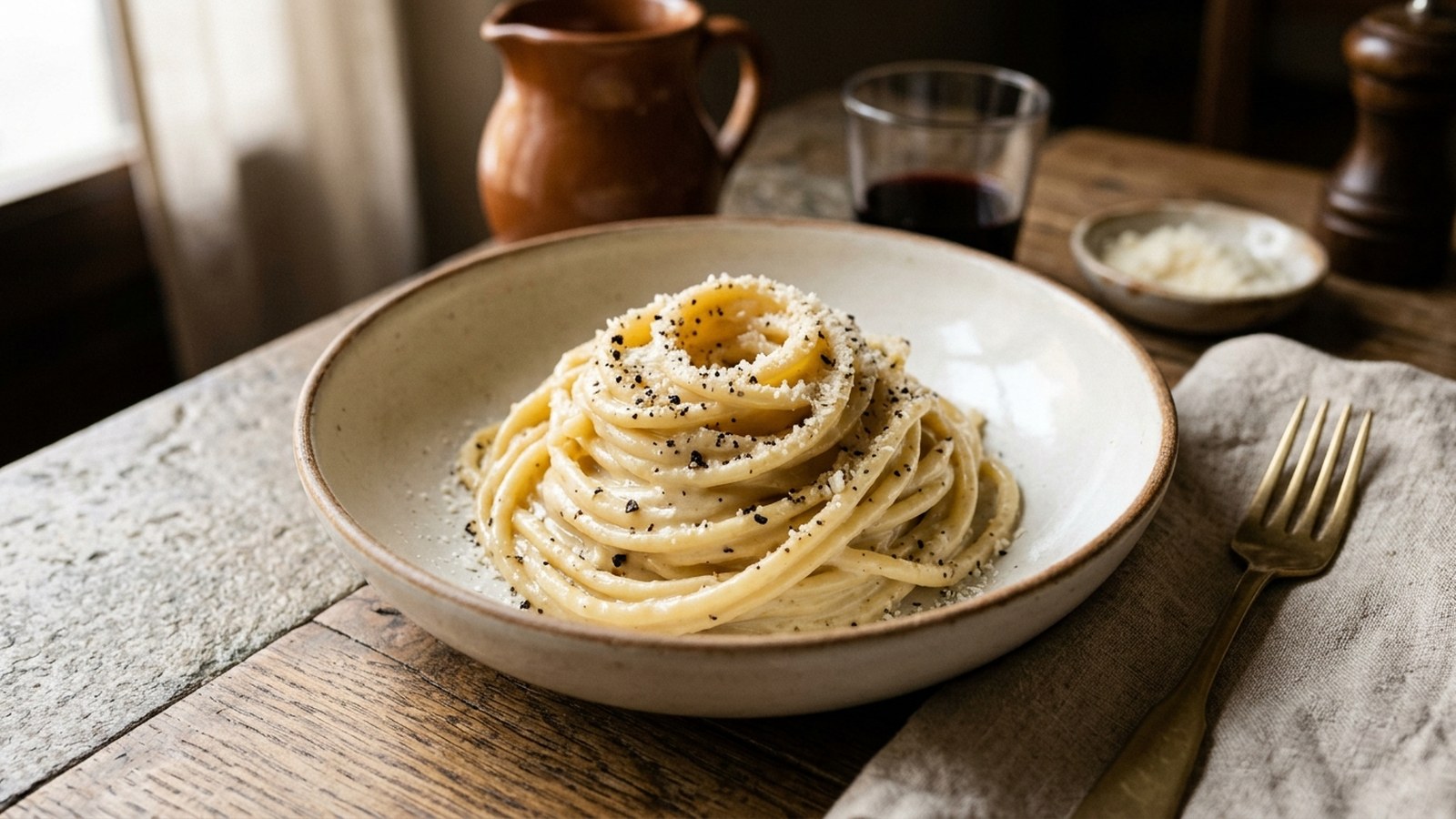
Roman Cacio e Pepe (Starch-Gel Cheese Emulsion Science)
Why Pecorino Clumps into Rubber Strings in Cacio e Pepe—and the 62 °C Starch-Gel Emulsion Fix

Test Kitchen Sign-Off
Marek Kowalski · Bistro Executive Chef • "Behind the Line" ColumnChef Marek’s rule: Pecorino proteins seize above 65 °C. Pull the pan off the flame for 45 seconds before tossing, or stabilize with our 1% starch-gel slurry.
Two paths to the same soul
⚡ Time saved: 10 min (-50%)Orthodox vs. Speed-Hack — Technical Matrix
| Culinary Parameter | 🕰️ Orthodox: Classic Roman Starchy-Water Mantecatura (20 min) | ⚡ Speed-Hack: Fail-Proof 4 g Cornstarch Gel Emulsion (10 min) |
|---|---|---|
| Total Time | 20 min | 10 min |
| Active / Passive Time | 20 min / 0 min | 10 min / 0 min |
| Target Temperature | 140 °F | 149 °F |
| Mode & Difficulty | SPEEDRUNNER · 3/5 | SPEEDRUNNER · 1/5 |
| Steps & Ingredients | 2 steps · 3 items | 2 steps · 4 items |
| Equipment | Wide skillet + shallow pot (concentrated pasta water) · Pepper mortar & fine rasp | Bowl + whisk · Skillet |
⚗️ Biochemistry of the Speed-Hack (Zero-Compromise Science)
Borrowed from pasta physics research: whisking 4 g cornstarch with water into a quick translucent gel prevents Pecorino proteins from clumping even during aggressive reheating.
5-Axis Sensory Profile
900 SHUUmami10/10
Acidity2/10
Sweetness2/10
Crunch2/10
Heat6/10
Culinary Heritage & Context
Heritage & Flavor Anatomy
Born among Apennine shepherds carrying cured sheep cheese, dried pasta, and whole peppercorns, Cacio e Pepe is modern culinary science’s sharpest test of temperature control.
Core Ingredients (2 servings · Orthodox)
Bronze-die tonnarelli or thick spaghetti7.8 oz
Finely microplaned Pecorino Romano DOP3.9 oz
Coarsely cracked black pepper + starchy pasta water1/2 cup
Test Kitchen Questions & Answers
+Does traditional Roman Cacio e Pepe ever contain butter or cream?
Never in classic Rome. Pure starchy pasta cooking water emulsifies the melted sheep-cheese fats at 56–62 °C.