
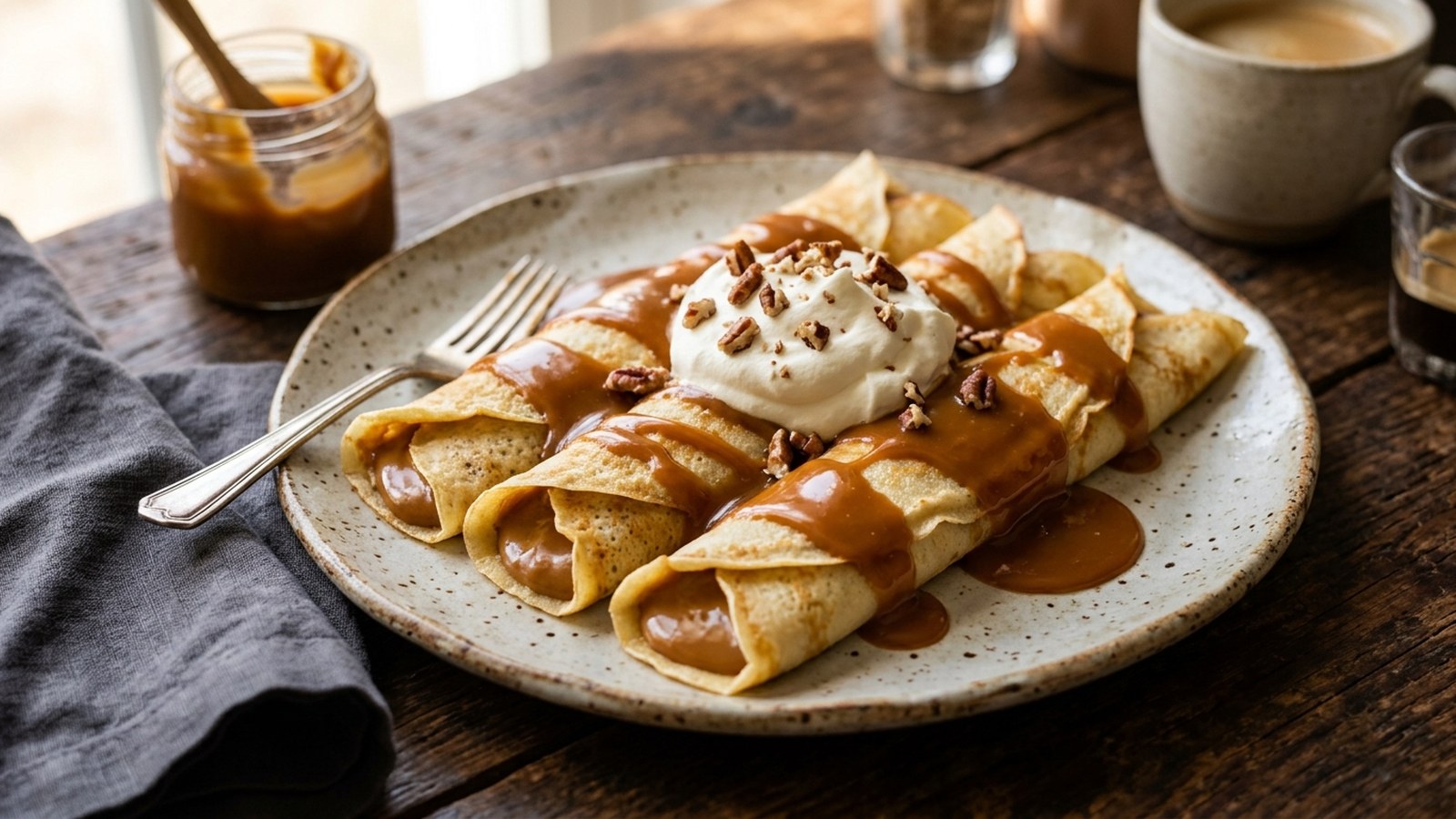
Dulce de leche is Argentina’s unofficial dessert emblem—spread generously inside paper-thin panqueques with lightly whipped cream from Buenos Aires cafes to Mendoza.
Argentine Panqueques with Homemade Dulce de Leche (Cajmak)
Silky Argentine crepes filled with caramelized dulce de leche: 2-hour submerged water bath craft vs. 18-minute wide-skillet sodium bicarbonate Speed-Hack.

Founder of Culina365 • Kitchen-Tested Recipes & Flavor Chemistry
“Crucial safety check: if simmering a closed condensed milk can, keep it 100% submerged in water for 2 hours—never heat dry metal. Our open-pan baking-soda Speed-Hack reaches the same Maillard amber in 18 minutes.”
Step-by-Step Execution & Timers
Open-pan baking soda caramelization (9 min)
Simmer condensed milk, butter pat, and 1/5 tsp baking soda in a wide skillet while whisking continuously 8–9 min until deep amber.
Wide evaporation surface + elevated pH cut Maillard browning time by >85%.
Whisk corners relentlessly to prevent scorched dairy specks.
Initial light foam settles into glossy ribbons coating the spatula.
Fast crepes & immediate plating
Fry crisp crepes on second pan, spread with fresh skillet dulce de leche, fold into triangles, and serve warm.
Dual-burner staging finishes everything in one continuous 18-minute window.
Pull kajmak off heat slightly looser than desired; it firms as it cools.
Rich toasted-butterscotch aroma filling the room.
Context-Aware Kitchen Mentor
Snap or simulate a pan frame — Sous-Chef gauges Maillard browning vs. scorching risk.
Wide evaporation surface + elevated pH cut Maillard browning time by >85%. Burn guard: Whisk corners relentlessly to prevent scorched dairy specks.
Tell me what you see and hear right now on "Open-pan baking soda caramelization (9 min)". Look for this exact cue: Initial light foam settles into glossy ribbons coating the spatula.
Kitchen FAQ (Schema Grounded)
Why does a tiny pinch of baking soda accelerate dulce de leche browning?
Alkaline baking soda raises pH, supercharging Maillard reactions between lactose and milk proteins.