
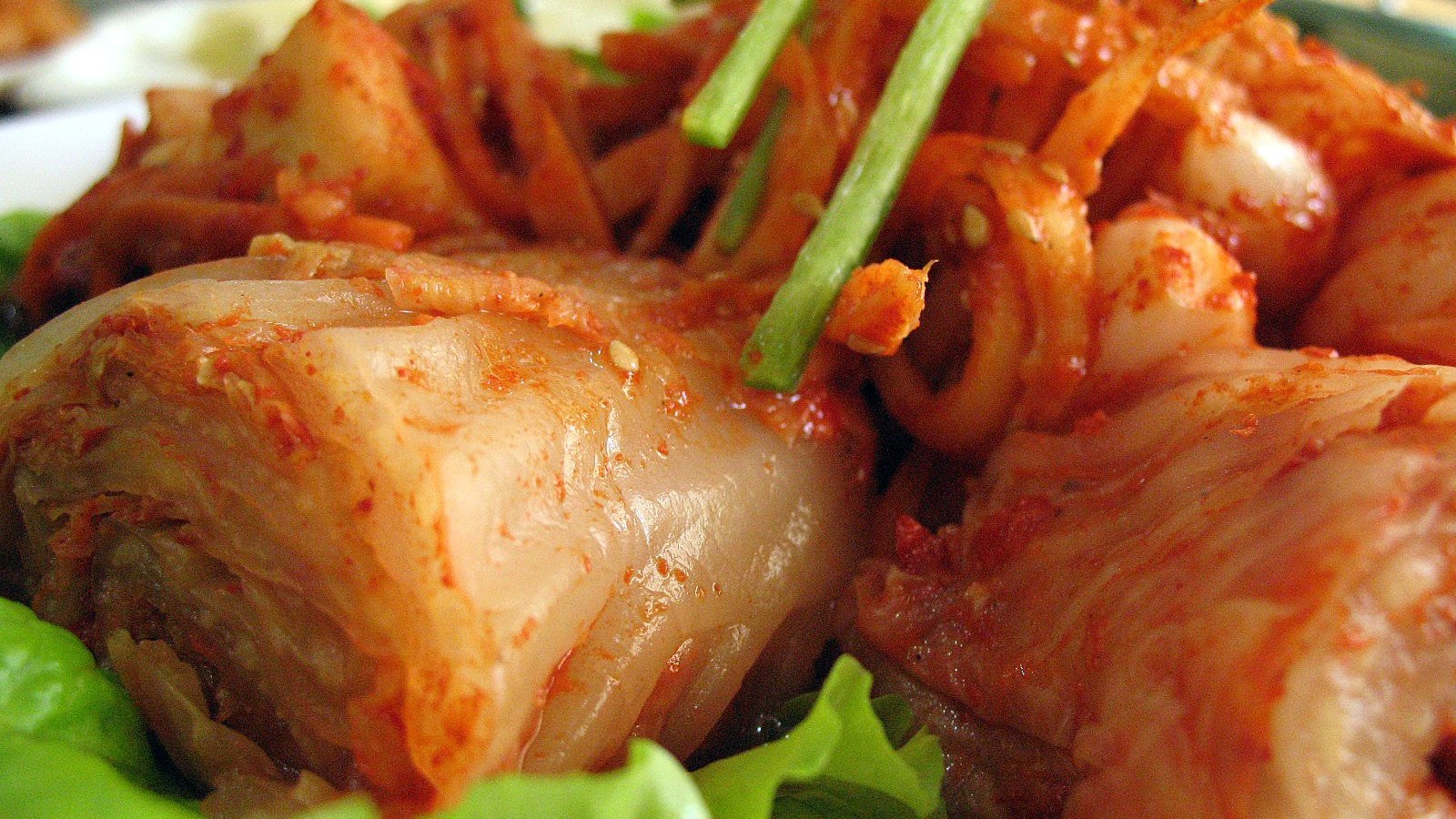
Kimjang — the communal late-autumn kimchi preparation — holds UNESCO intangible heritage status for transforming winter cabbage through lactic mastery.
Traditional Kimchi (14-Day Fermented Tongbaechu vs. 20-Min Fresh Geotjeori)
Step-by-step Korean Tongbaechu Kimchi with rice-flour paste (14-day ferment) vs 20-minute Geotjeori fresh kimchi + gochugaru substitute guide.

Artisan Sourdough Baker & Fermentation Specialist
“Workshop tested: test salted napa ribs by bending them 180 degrees; once supple without snapping, rinse thrice and drain thoroughly.”
Step-by-Step Execution & Timers
10-Min Quick Salt-Sugar Crisp & Drain
Toss bite-sized napa leaves with 1 tsp salt and 1 tsp sugar for 10 min to expel surface water, then drain thoroughly without rinsing.
Combining sugar with salt pulls excess moisture gently while balancing bitterness upfront.
Drain strictly around 10–12 minutes so chopped leaves stay crisp and balanced.
Volume drops ~20% while stems snap loudly when bitten.
Glazing in Gochugaru, Vinegar & Toasted Sesame Oil
Stir gochugaru, garlic, fish sauce, rice vinegar, and scallions into glaze. Coat leaves evenly, finish with toasted sesame oil + seeds, and serve right away.
Rice vinegar mimics lacto-fermented brightness immediately while sesame oil extracts fat-soluble gochugaru carotenoids.
Never add sesame oil to 14-day fermented jars (fats go off), yet in fresh 20-min Geotjeori it unlocks peak aroma.
Glossy fiery-red leaves perfumed with roasted sesame and fresh garlic.
Context-Aware Kitchen Mentor
Snap or simulate a pan frame — Sous-Chef gauges Maillard browning vs. scorching risk.
Combining sugar with salt pulls excess moisture gently while balancing bitterness upfront. Burn guard: Drain strictly around 10–12 minutes so chopped leaves stay crisp and balanced.
Tell me what you see and hear right now on "10-Min Quick Salt-Sugar Crisp & Drain". Look for this exact cue: Volume drops ~20% while stems snap loudly when bitten.
Kitchen FAQ (Schema Grounded)
Why cook a rice-flour porridge for kimchi seasoning paste?
Gelatinized rice starch glues gochugaru paste evenly onto leaves and fuels beneficial Leuconostoc bacteria at the start of fermentation.
What substitutes best for Korean gochugaru flakes?
Blend sweet smoked paprika (4 parts) with Aleppo / Urfa chili flakes or crushed red pepper (1 part) for an 85% flavor match.